Synonyms: acrylic gouache, acrylic gouache paint, matte acrylic paint, matte opaque acrylic, permanent gouache, acrylic gouache Canada, illustration acrylic paint, design acrylic paint, flat matte acrylic, opaque acrylic colours, colour theory paint, transparent acrylic gouache

Art Noise Acrylic Gouache | Matte Opaque Colours

Flat, matte colour that stays water-resistant after it dries

Ultra-smooth handling for crisp shapes, edges, and graphic passages

Matte, generally opaque colour for confident mixing and fast decisions

Water-resistant when dry for clean layering and durable finishes

Quick Points on Art Noise Acrylic Gouache | Matte Opaque Colours

• For the flattest passages, load a soft synthetic brush, lay one confident pass, then stop
• For clean edges, let the first layer dry fully, then overpaint rather than scrubbing back into tacky paint
• For accurate mixes, premix midtones on the palette instead of blending endlessly on the surface
• For glazing-style colour shifts, choose colours labelled Transparent and build in multiple thin layers
• Because it becomes water-resistant when dry, make corrections while wet, or repaint and refine once dry

Art Noise Acrylic Gouache gives you smooth, matte colour for illustration, design, studies, and studio work. Expect generally opaque coverage (unless a colour is labelled Transparent) and clean mixing without the muddiness common in filler-heavy paints.

Filters

Filters

$
to
$
52 products
Sort by
Sort by
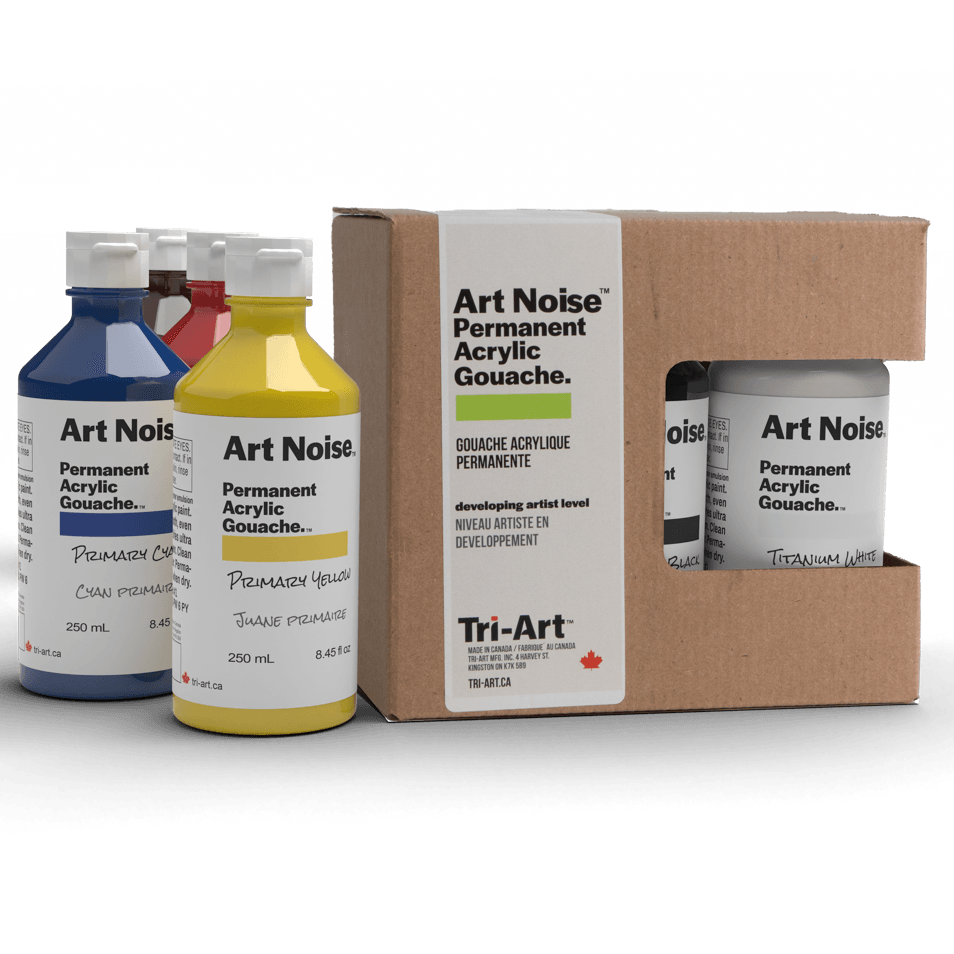
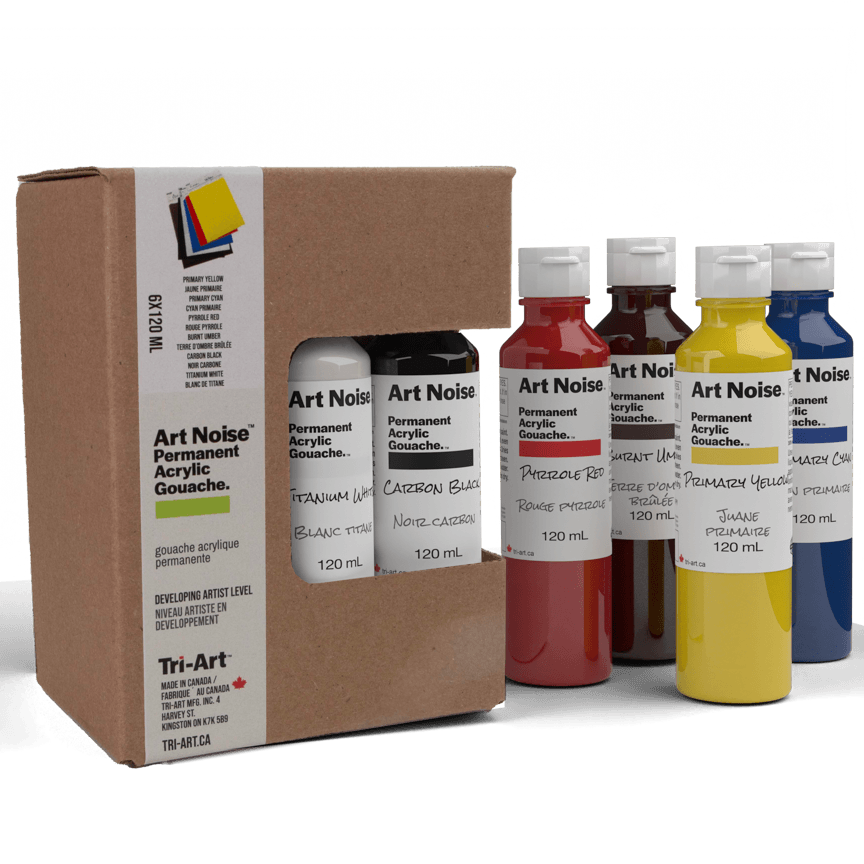
Art Noise - 6 Colour Sets - Tri-Art Mfg.Art Noise - 6 Colour Sets - Tri-Art Mfg.
Art Noise - 6 Colour Sets
Sale priceFrom $50.98 CAD
11 reviews
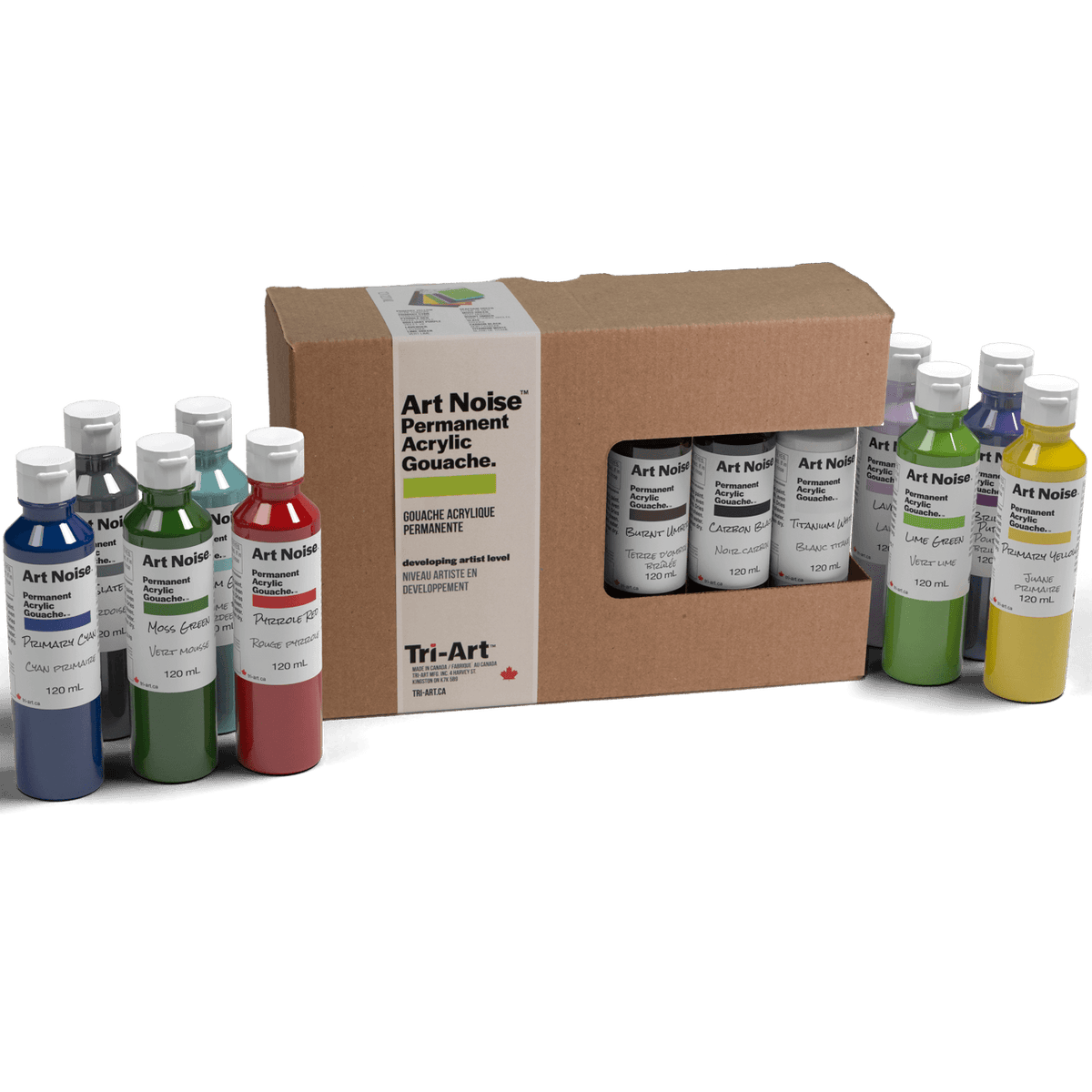
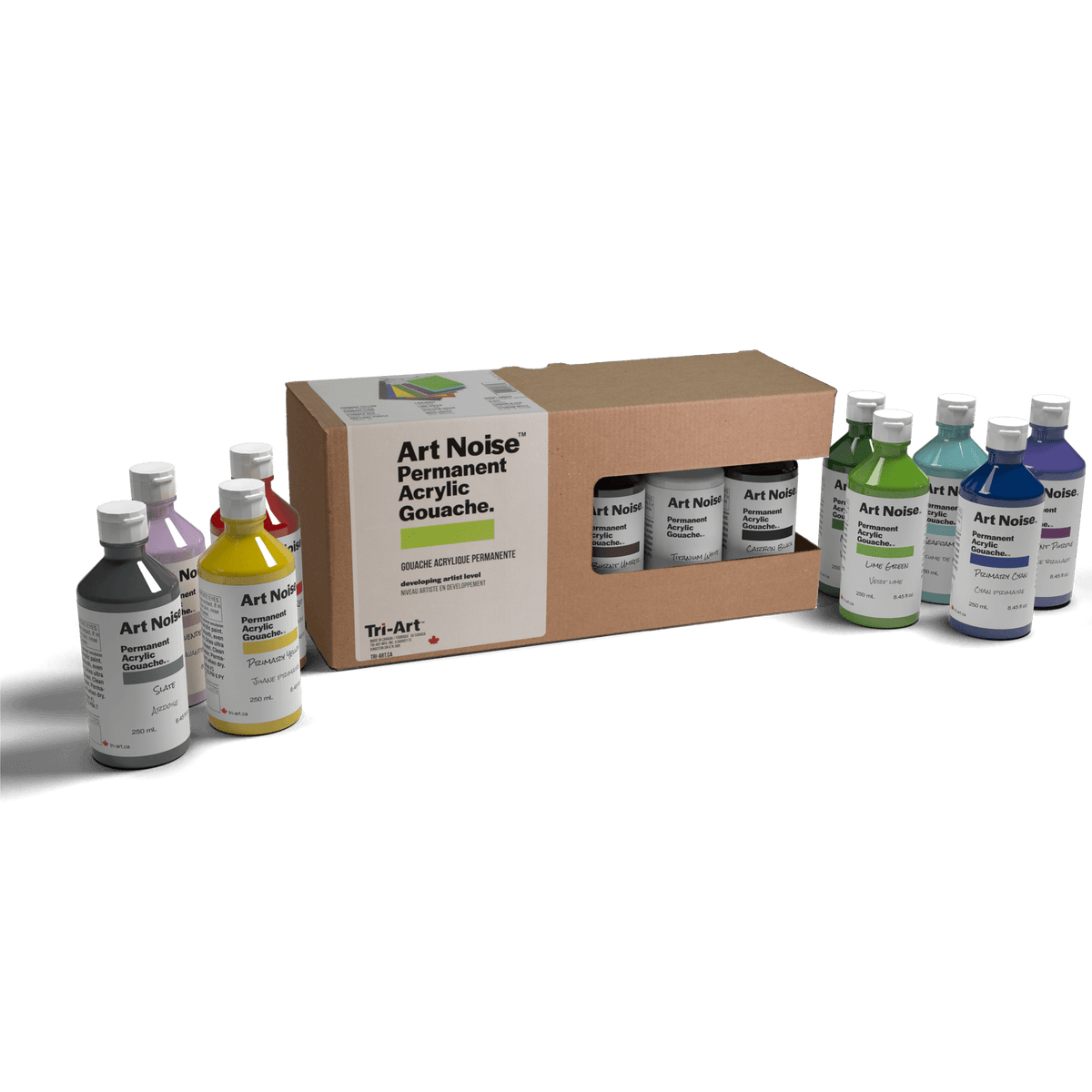
Art Noise - 12 Colour Sets - Tri-Art Mfg.Art Noise - 12 Colour Sets - Tri-Art Mfg.
Art Noise - 12 Colour Sets
Sale priceFrom $81.59 CAD
11 reviews

Frequently asked questions

Quick answers to common questions on Art Noise Acrylic Gouache | Matte Opaque Colours. If you still need help, contact us and we’ll point you to the right option.

What is Art Noise Acrylic Gouache, and what is it best for?

Art Noise is Tri-Art’s permanent acrylic gouache line, made as a 100% acrylic emulsion and designed for smooth, matte, largely opaque colour that suits illustration-style shapes, design work, and clean underpaintings; for best coverage, apply it in 2 thinner coats (let the first coat go touch-dry before the second) rather than trying to force one heavy coat. If you want to see the full colour range and sizes, start here: Art Noise Acrylic Gouache colours.

Is Art Noise Acrylic Gouache re-wettable like traditional gouache?

No, this is acrylic gouache, so once it dries it becomes water-resistant and does not re-wet like traditional gum-arabic gouache; if you need soft blends, do them while the layer is still wet, then let it dry fully before glazing or detailing on top. For “what is this line” context and shopping, use Tri-Art Art Noise Acrylic Gouache as your reference point.

How do I thin Art Noise Acrylic Gouache without making it streaky or weak?

Thin gradually and stop as soon as the paint starts to lose coverage, because excess water can make acrylic films less robust; for controlled washes and smoother flow, extend with an acrylic medium (many are essentially acrylic without pigment) and then add only a little water as needed. A practical starting point is to mix a small puddle of paint with a smaller puddle of medium, test a brushstroke on scrap, then adjust in tiny steps instead of dumping in water.

How should I use this line for underpainting, then paint over it?

For underpainting, keep the first passes thin and matte, block in big shapes, and let the layer dry before painting on top, since acrylic forms strong bonds to itself as it dries; if you plan to add more transparent layers later, choose “Transparent” colours (when available) or thin carefully so you can still see your value map underneath. For the range that’s meant for this workflow, see Art Noise Acrylic Gouache for underpainting and layering.

Can I use Art Noise Acrylic Gouache for paint pouring and fluid art?

You can use it in fluid techniques, but for consistent pours you will usually get better flow and fewer surface issues by mixing with a proper pouring medium rather than thinning heavily with water; as a Tri-Art option, Liquid Glass Pouring Medium and Finishing Resin is made for pouring and topcoating, and Tri-Art also makes dedicated Liquid Glass Pouring Colours formulated specifically for colour pouring. If you still want to pour with Art Noise, do a small test tile first and aim for an even, ribbon-like flow off the stir stick before you commit to a larger piece.

Why do some Art Noise colours cover more than others?

Coverage varies by pigment, and Tri-Art notes that the line is generally opaque with a matte finish unless the colour name indicates transparency; if you see “Transparent” in the name, plan for it to behave more like a glazing colour. A reliable technique is to do a quick drawdown test on scrap (one stroke, let dry, then a second coat) so you know whether you need two coats for flat coverage or whether you can use that colour deliberately for layered depth.

How do I get a smoother finish for illustration work (less brush texture)?

Start with a smoother ground, because paper tooth and raw canvas texture will telegraph through ultra-smooth paint films; prime first, let it dry, then lightly sand the ground and dust it off before painting if you want crisp edges and flatter passages. For a surface designed to be slightly porous with a tooth that can be sanded smoother, see Rheotech Gesso, then apply Art Noise in thinner coats and avoid overbrushing as it starts to set.

Can I varnish acrylic gouache, and what should I expect to change?

Yes, you can varnish once the paint is fully dry, but expect the surface to change, even a clear coat can deepen colour and shift the look away from the original matte; the safest approach is to test your varnish choice on a small swatch made with the same colours before you varnish the final piece. Tri-Art’s Acrylic Varnishes and Mediums collection includes final-layer varnishes meant to reduce visible brushstroke and unify sheen, and you can always return to Art Noise Acrylic Gouache colours if you’re matching hues for touch-ups.

Discover a new product line.

Pick your paint body, then round out your toolkit with a simple palette and the right mediums.

  1. Choose body: thick for texture, fluid for pours and glazing, medium for everyday painting.
  2. Start small: pick a limited palette and add colours as you discover what you reach for.
  3. Match your surface: use a suitable ground, then tune sheen and flow with mediums.

Common questions

Why should I choose Rheotech Student Acrylics?

Choose it when you want reliable, medium-body paint that is easy to control for learning, studies, production work, and classroom-style speed.

What is unique about UVFX Fluorescent Acrylics?

Yes if you use acrylics and care about repeatable outcomes. Start by choosing the medium family that matches your goal (flow, body, texture, priming, final sheen), then test one layer on your support before committing to a large piece.

Tri-Art Acrylic Mediums is a Professional paint, will it work for me?

Yes if your goal is UV response and visibility under blacklight. If you primarily need conventional studio colour mixing and subtlety, use your regular acrylic line and reserve UVFX for accents or purpose-built passages.

Free shipping

Free Canadian shipping and returns - customs and duties taxes included